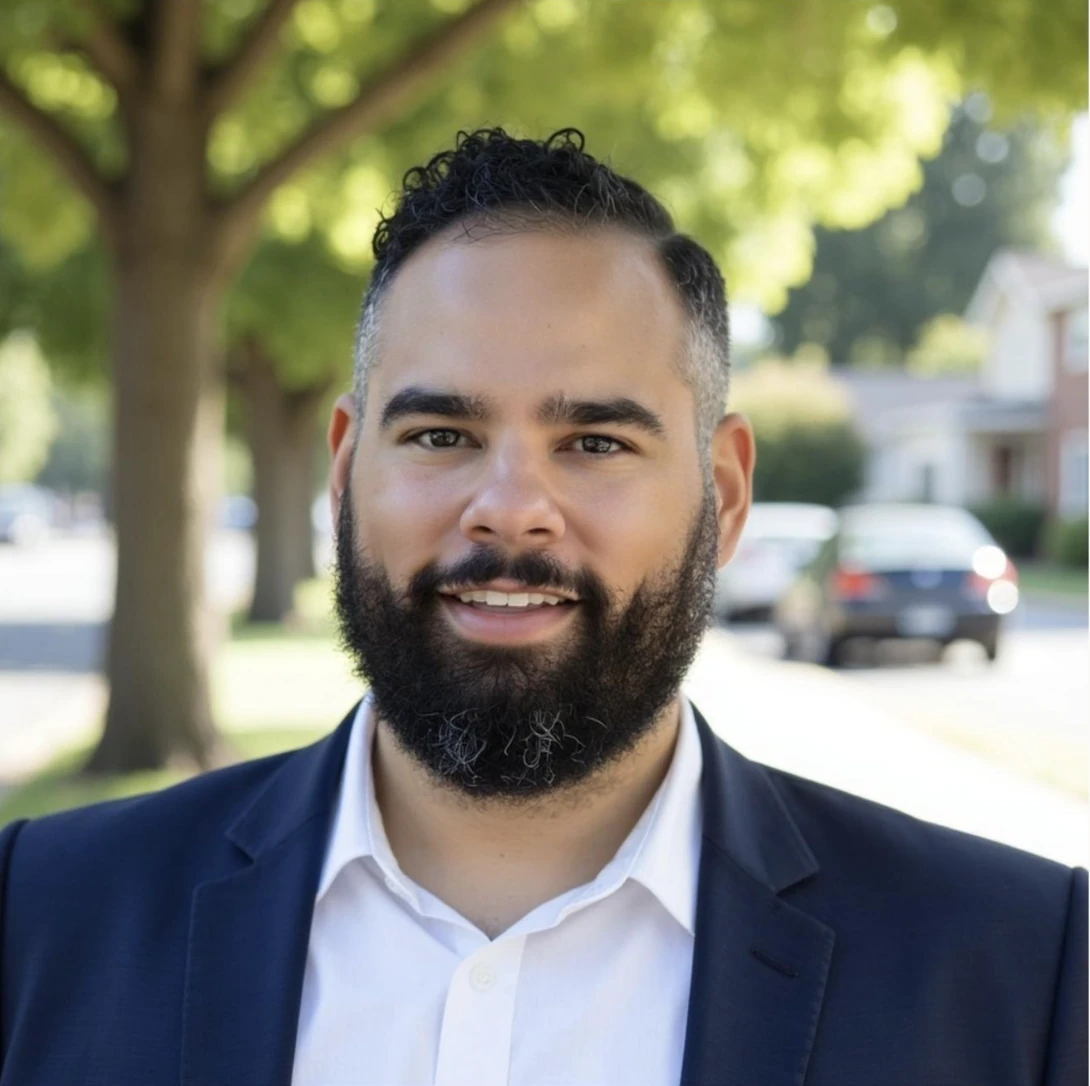
About Me
Welcome.
I've never fit neatly into one box. Mixed race, I wasn't "black enough" or "white enough" depending on the room. I had no interest in sports — I'd rather be alone in my room, putting on fashion shows for my stuffed animals. For years it felt like standing outside every category.
Looking back, I can see what that does to a person. It's exhausting to keep explaining yourself, adjusting yourself, or wondering whether something about you is just wrong. If you've done that your whole life, you already know the feeling I mean.
Standing outside made me an observer. I became curious about why people think the way they do, how behavior develops, and how much our surroundings shape us. I thought healthcare was where I belonged, but biology never clicked the way psychology did — so I followed the curiosity instead.
Early in my career I worked in inpatient behavioral health. I watched the same patients get discharged and come back two weeks later, no better than when they left. And I saw who got labeled what — Black kids called "aggressive" or "bipolar" while white kids with the same behavior got "ADHD" or "impulsive." It echoed something I already knew first-hand: difference treated as a defect.
Working in autism services changed how I thought about the work. Instead of asking how to make someone look more typical, I started asking how to help them build a life that fits who they are. A lot of what gets called a social deficit is really just a difference. So I stopped treating quirks and intense interests as problems to fix. I help people understand how their own minds work and build around that — so they can live true to themselves while still navigating the world.
That's also why I've never been drawn to rigid, by-the-book scripts — they rarely fit the person in front of me any better than society's boxes fit me. My approach is insight-driven: before we reach for techniques, I want to understand what's happening underneath. Once we understand what's driving it, we decide together which tools actually fit you.
Today I run a fully virtual practice for adults who've felt misunderstood for most of their lives — people with ADHD, OCD, autism, anxiety, a late diagnosis, an LGBTQ+ identity, or just the sense that they've never quite fit. You won't have to translate yourself here. I don't believe your identity is the problem to solve.
Licensed Professional Counselor | Arizona #LPC-24496
Licensed Professional Clinical Counselor | California #LPCC21526
Registered Telehealth Provider | Florida #TPMC6413
Licensed Mental or Behavioral Telehealth - Counselor | Idaho #3571697
Licensed Clinical Professional Counselor | Illinois #180.015245
Licensed Mental Health Counselor | Washington #LH61599142
National Certified Counselor (NCC) · NBCC Board Certified